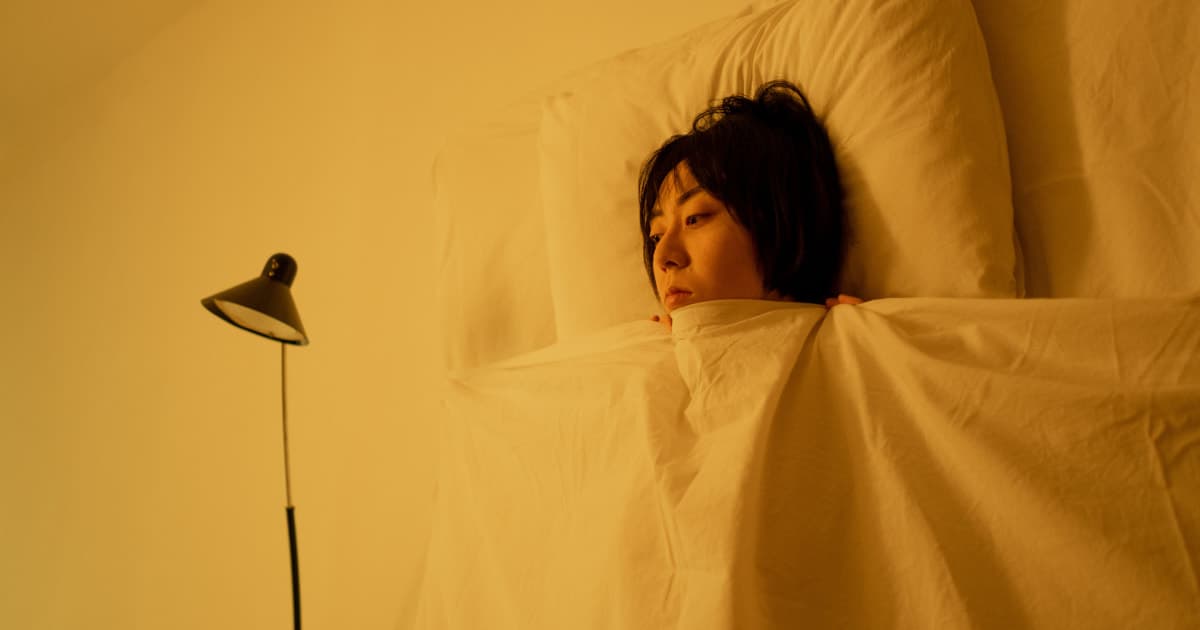
The moment your head hits the pillow, your brain decides it's time to review every unresolved problem in your life.
Tomorrow's meeting. The conversation you handled badly. The bill you haven't dealt with. The worry you've been avoiding all day, which has now found the one quiet moment available to it.
Nighttime anxiety is different from daytime anxiety. It's more isolated, more persistent, and harder to interrupt — because the usual distractions aren't available and your defenses are down. These 60 affirmations are specifically designed for that experience. They're organized by the type of anxiety most likely to be keeping you awake right now.
Why Anxiety and Sleep Are in a Cycle — and How to Break It
The relationship between anxiety and poor sleep is bidirectional: anxiety disrupts sleep, and poor sleep amplifies anxiety. A study published on PubMed found that bedtime rumination and worry are directly associated with significantly worse sleep outcomes — including earlier unwanted wake times and longer time to fall asleep. The research is clear: what you think about as you try to sleep has a measurable impact on the quality of sleep you get.
Affirmations break this cycle by giving the mind something constructive to anchor to — interrupting the loop of anxious thought and replacing it with calm, grounded intention. They work best when paired with slow, deliberate breathing and practiced consistently over time.
For a broader daily practice, see our guide to daily affirmations.
60 Bedtime Affirmations for Anxiety
Affirmations for Racing Thoughts
These are for when your mind simply won't stop — jumping from thought to thought with no clear object of worry, just relentless mental chatter.
- I give my mind permission to rest.
- I do not need to solve anything tonight.
- My thoughts are passing clouds — I watch them, I do not follow them.
- The quiet I am looking for is already here beneath the noise.
- I release every thought that does not serve my rest.
- My mind has worked hard today. It is allowed to stop now.
- I breathe in calm and breathe out the chatter.
- I don't need to think my way to peace — I simply choose it.
- Each breath takes me further from the noise and closer to stillness.
- I am allowed to let tonight be quiet.
Affirmations for Worrying About Tomorrow
Anticipatory anxiety — worry about what hasn't happened yet — is one of the most common forms of bedtime anxiety. These affirmations address the future directly.
- Tomorrow will take care of itself. Tonight, I rest.
- I have handled every tomorrow that has ever come. This one is no different.
- Worrying tonight does not protect me tomorrow — rest does.
- I release tomorrow and return to right now.
- I am not responsible for solving the future at midnight.
- Whatever comes tomorrow, I will meet it rested and clear.
- Tonight's rest is tomorrow's resilience.
- The future is not mine to control — only to meet with intention.
- I have done what I can today. Tomorrow I will do what I can then.
- I let tomorrow belong to tomorrow and give tonight to rest.
Affirmations for Replaying the Day
Rumination — going over what happened, what was said, what you should have done differently — is another common night-time pattern. These affirmations help you close the day.
- Today is complete. I do not need to revisit it.
- I did the best I could with what I had today. That is enough.
- What happened today is finished and I release it.
- Replaying the day changes nothing. I choose to let it go.
- I forgive myself for anything I wish I had done differently.
- The people in my life are not still thinking about what I said. I can let it go too.
- I close the chapter of today with compassion and gratitude.
- I am not my worst moment from this day.
- I learn from today and then I let it rest.
- The day is done. I am allowed to be done with it.
Affirmations for Physical Anxiety Symptoms
Anxiety lives in the body as much as the mind — tight chest, tense muscles, shallow breath, restless limbs. These affirmations work alongside the body's own relaxation response.
- I feel my body releasing tension with each breath I take.
- My muscles are softening. My jaw is unclenched. My shoulders are dropping.
- My body knows how to rest — I am giving it permission to do so.
- With each exhale, I release a little more tension than I carried in.
- My heart rate is slowing. My breath is deepening. I am safe.
- I scan my body and wherever I find tension, I breathe into it.
- My nervous system is shifting from alert to rest.
- I am not in danger. My body can let its guard down now.
- Rest is available to me. My body is ready for it.
- I sink deeper into relaxation with every breath.
Affirmations for 3am Wake-Ups
Waking in the early hours — usually between 2am and 4am when cortisol begins to rise — is one of the most distressing anxiety experiences. These affirmations are specifically for that moment.
- Waking at this hour is normal. It will pass and sleep will return.
- I do not catastrophize this moment. I simply return to my breath.
- I am safe in my bed. The night is not a threat.
- I have fallen back to sleep before and I will do so again.
- I release the panic about being awake and choose calm instead.
- My body is still resting even when my mind briefly wakes.
- This feeling is temporary. Sleep is already returning.
- I breathe slowly and feel my body growing heavy again.
- I do not check the time. I only return to stillness.
- The dark and the quiet are on my side tonight.
Affirmations for Generalized Bedtime Calm
These are for the nights when there's no specific worry — just a general sense of unease, restlessness, or inability to feel safe enough to sleep.
- I am safe. I am warm. I am exactly where I need to be.
- Tonight, I give myself the gift of rest without guilt.
- Sleep is not something I chase — it comes when I stop resisting.
- I release the need to feel a certain way before I can rest.
- Peace is already here. I am settling into it.
- I am held by the quiet of this night.
- My only job right now is to breathe and let go.
- I deserve rest as much as I deserve anything good.
- I soften. I release. I rest.
- Tomorrow is taken care of. Tonight belongs to me.
How to Build a Bedtime Affirmation Practice for Anxiety
Identify your type before you start. Read the six categories and notice which one describes what's actually happening in your mind most nights. Start with that section — not the one that seems easiest.
Choose 3, not 30. More affirmations are not better at bedtime. The goal is a slow, anchored repetition — not reading through a list. Pick three that resonate and repeat them slowly, pairing each one with a full, slow breath.
Speak them slowly. Rushing defeats the purpose. The pace of a bedtime affirmation should match the pace you want your mind to reach. Slow down the words and your breathing will follow.
Don't try to believe them immediately. If the affirmation feels false — "I am safe" when your body is convinced otherwise — that's okay. Say it anyway. The point is to give the mind an alternative signal, not to force a feeling.
For 3am wake-ups: Keep 2 or 3 memorized so you don't need to reach for your phone. The screen light will work against you. Practice them in the dark, slowly, without opening your eyes if you can.
Frequently Asked Questions
Why does anxiety get worse at night?
Nighttime removes the distractions that keep anxiety manageable during the day. Without tasks, movement, and social interaction to anchor your attention, the mind turns inward — and anxious minds tend to ruminate. The darkness and stillness that should support sleep instead become a stage for worry. This is a documented and common pattern, not a sign that something is particularly wrong.
Should I say bedtime affirmations out loud or silently?
Silently, for most bedtime use. Speaking out loud can be useful for daytime affirmation practice, but at bedtime the goal is to keep your body in a low-arousal state. Silent repetition, paced with slow breathing, is more conducive to sleep onset than audible speech.
How many nights of practice before I notice a difference?
Research suggests that consistent affirmation practice — even for 3 to 4 days — begins to reduce anxiety and worry. Meaningful shifts in sleep quality typically emerge after 2 to 3 weeks of nightly practice. The key is doing it every night, not just the nights when anxiety peaks.
What if affirmations make my anxiety worse by reminding me to think?
This can happen initially, particularly with anxiety that is well-established. If focusing on affirmations increases mental activity rather than reducing it, try pairing them with a body scan — starting at your feet and slowly moving awareness up through your body — with each affirmation anchored to a specific body part releasing tension. The physical anchor can reduce the purely mental loop.
Can bedtime affirmations replace sleep medication or therapy?
No. For anxiety disorders and chronic insomnia, evidence-based treatments — particularly Cognitive Behavioral Therapy for Insomnia (CBT-I) and appropriate medical care — have a much stronger evidence base. Bedtime affirmations are a valuable complementary practice, not a clinical treatment. If sleep anxiety is significantly impacting your daily life, professional support is the right next step.